
Ledger · 6 min
What is AI card grading?
AI card grading estimates a trading card’s condition from photos — centering, corners, edges, and surface — so you can decide what is worth submitting to PSA, BGS, SGC, or CGC.
Updated August 12, 2026 · TCGpal
A short definition
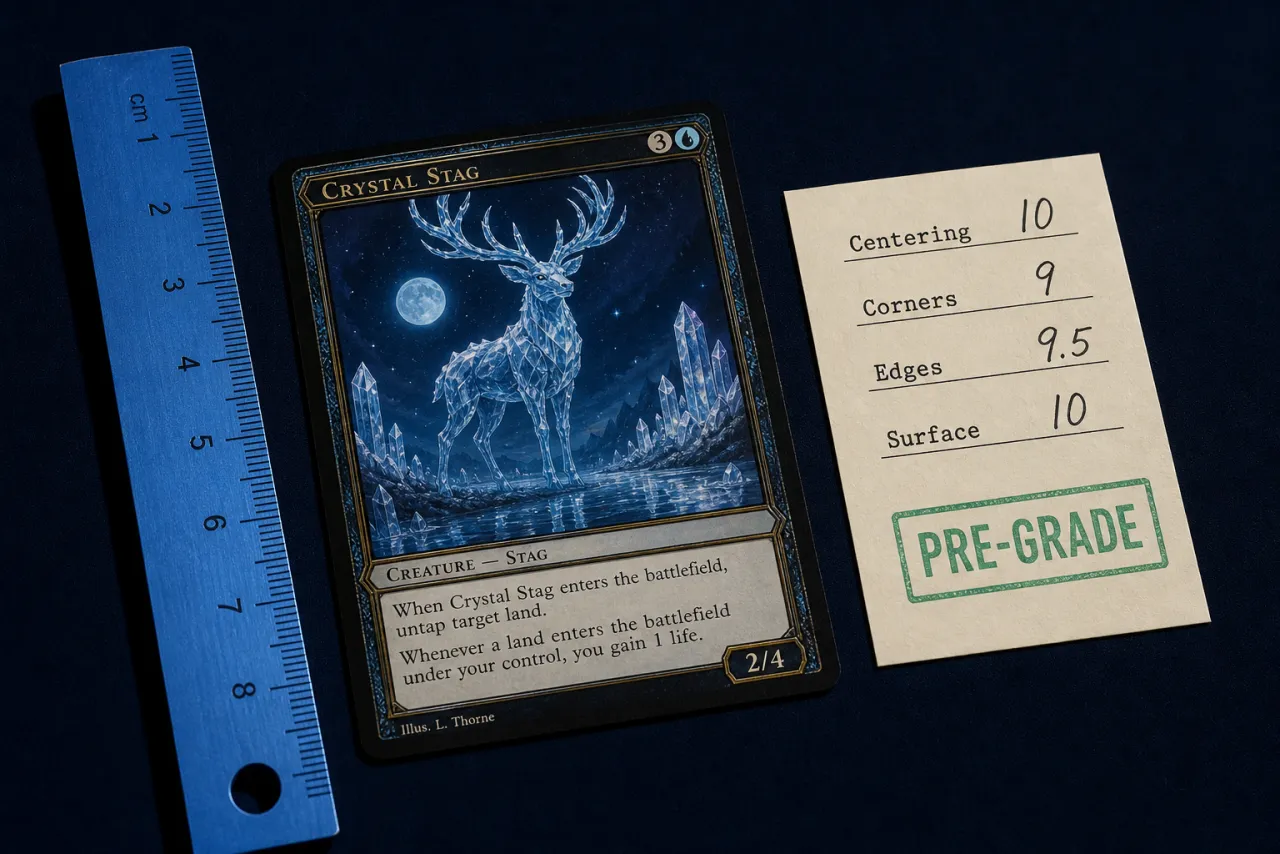
AI card grading is software that looks at a photo of a trading card and estimates its condition on the same 1–10 scale professional graders use. It is a pre-grade: a fast, cheap read on whether a card is worth the slab fee, not a certificate the market treats as authentic.
TCGpal scores four criteria — centering, corners, edges, and surface — then maps that read to PSA, BGS, SGC, and CGC estimates. You still inspect the card in hand. A company like PSA still authenticates, encapsulates, and publishes the grade buyers actually pay for.
Example report
Front + back condition
Same four criteria a human grader uses.
- Centering
- 10
- Corners
- 9
- Edges
- 9.5
- Surface
- 10
PSA
10
BGS
9.5
SGC
10
CGC
9.5
What it is for
Most cards are not worth grading. Submission fees run from about $15 to $50+ per card, plus shipping and time. AI grading exists so you do not spend that on a Near Mint copy you could have spotted under a desk lamp.
Use it when you have a stack of pulls, a childhood binder, or a show find and you want a consistent second opinion before you fill out a submission form. Use the subgrades, not just the headline number: a 9.5 with a 7 on corners is a different card from a balanced 9.5.
What it is not
It is not authentication. A convincing fake can still photograph well. It is not a replacement for feeling the card: light creases, warping, and some surface issues hide in glare. It is not a population report or a sold listing — those are separate data, which TCGpal shows next to the grade so the fee has a dollar figure beside it.
How to use a pre-grade in practice
Photograph front and back in bright, indirect light. Read the four subgrades. If they are high and the raw card is valuable enough to cover the slab, it is a candidate. If they are not, keep it raw. Then look at graded comps for that printing before you pay anyone to put it in plastic.
FAQ
Questions collectors ask
Does an AI grade count if I sell the card?
No. Buyers pay for a slab from a company they recognize. A TCGpal report is a private condition read you use to decide whether that fee is worth it. Listing a raw card as “AI 10” will not get you PSA 10 money.
Can AI grading tell if my card is fake?
No. A convincing counterfeit can still photograph clean. TCGpal estimates condition from what the photo shows. Authentication — print, stock, hologram, smell, feel — is still a human and a grading company problem.
Why not just look at the card myself?
You should. The model is a consistent second pass: it measures centering the eye rounds off and will not talk itself into a 10 because the artwork is pretty. Use it on a stack, then confirm the keepers in hand under a light.
If TCGpal likes it, do I still send it to PSA?
If you want the market grade, yes. A high pre-grade means the card is a candidate, not that the room will agree. Inspect it, check comps and population, then submit — or keep it raw if the math does not clear.