
Ledger · 7 min
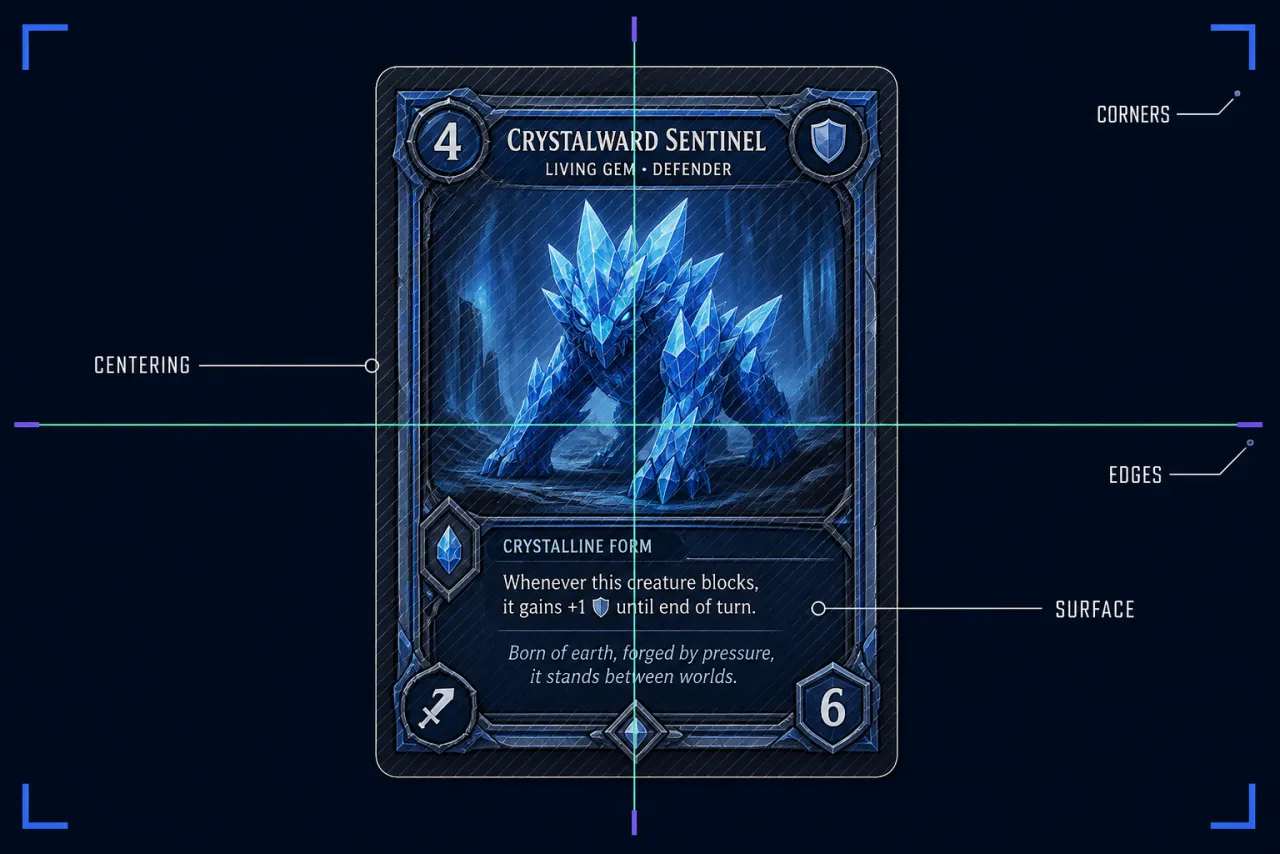
The 4 subgrades: centering, corners, edges, and surface
Professional graders score four areas on every card. Here is what centering, corners, edges, and surface actually mean — and which one usually limits the grade.
Updated August 12, 2026 · TCGpal
Why subgrades matter
A single number hides the damage. Two Gem Mint 9.5s can be very different cards: one is off-center, the other has a soft corner. Subgrades make the limit visible. Beckett prints them on the label. TCGpal shows them on every report so you can see what would fail a 10.
Centering
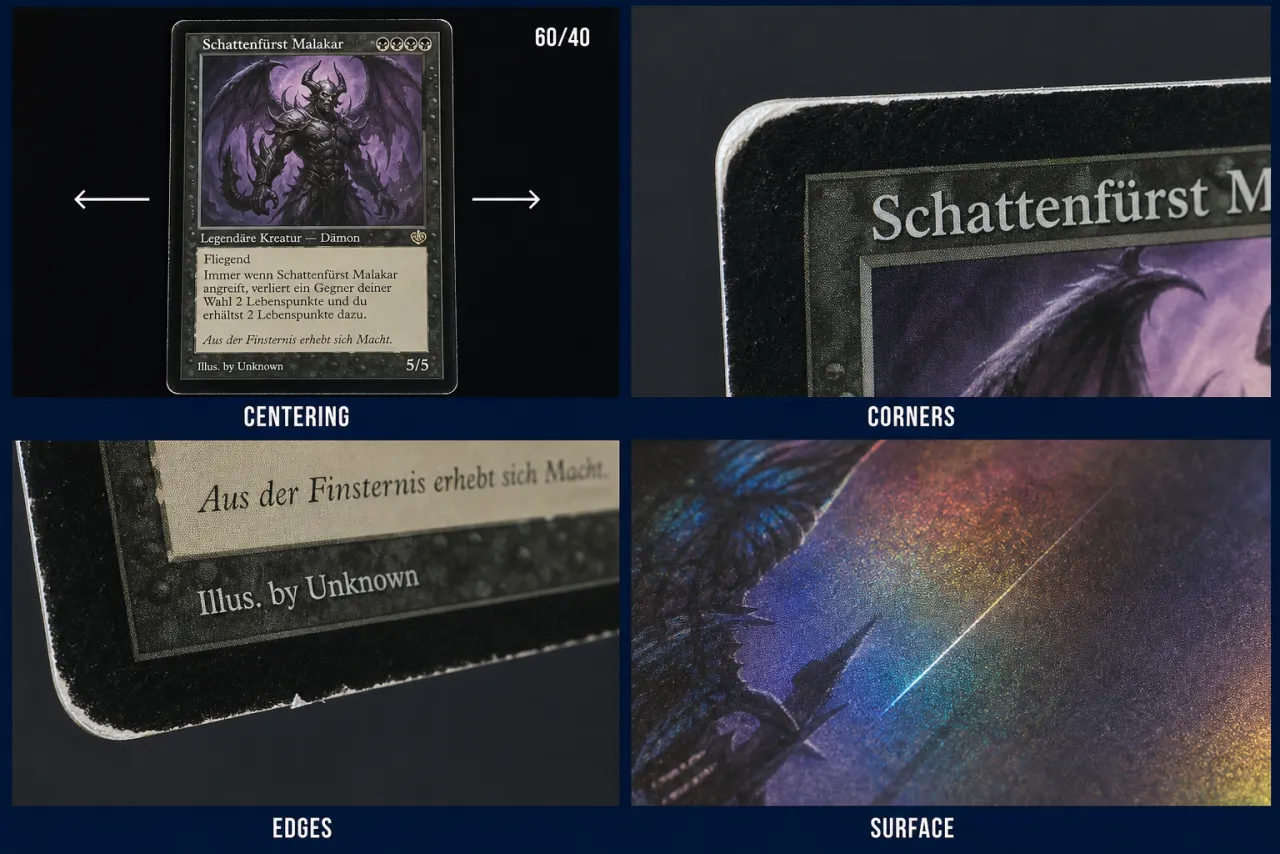
Centering is how evenly the artwork sits inside the border. Graders measure left/right and top/bottom.
Perfect centering is 50/50. On the front, 55/45 or better still earns a 10 (PSA GEM-MT 10); past that 60/40 is a 9, and every further step down the chart costs at least another grade. TCGpal measures the ratio from the photo and applies this chart exactly, with no allowance added.
It is the easiest defect to spot without magnification. If a border is fat on one side and skinny on the other, do not expect a 10 — no amount of sleeve care will move the print.
TCGpal will not always give you a number. Centering is a measurement of the card's own printed border, and a sleeve, top-loader or case around the card looks exactly like one; a borderless printing has no border to measure at all. In either case the report says so rather than showing a ratio it cannot stand behind.
Corners
Corners are the most fragile part of a card and often the limiting factor. Graders look for whitening, fraying, and rounding on all four corners, usually under magnification. Factory cuts can nick a corner before the pack is opened; that still counts.
Handle cards by the edges. A fingerprint on a holo is a surface issue. A thumb on the corner is how 10s become 8s.
Edges
Edges are checked for nicks, chips, whitening, and roughness on all four sides. Foil and holo cards pick up edge wear from the manufacturing process itself. A rough factory cut is still wear on the report.
Surface
Surface covers scratches, print lines, ink spots, dimples, and whitening on the front and back. Holo stock is unforgiving: a scratch that is invisible on a non-foil can flash under light. Print lines from the factory count. So do sleeve scratches you put there last week.
This is the subgrade photos miss most often. Glare hides scratches. A second angled shot, and a look in hand, are worth more than arguing with the model.
Example report
Front + back condition
Same four criteria a human grader uses.
- Centering
- 10
- Corners
- 9
- Edges
- 9.5
- Surface
- 10
PSA
10
BGS
9.5
SGC
10
CGC
9.5
FAQ
Questions collectors ask
Which subgrade usually kills a 10?
Corners, more often than collectors want to admit. Whitening and a soft tip show up under a loupe even when the artwork looks untouched. Surface on holos is a close second — one flash scratch and the 10 is gone.
If centering is ugly, can the rest still save it?
No. Centering is printed. You cannot sleeve it better. A fat border on one side is a ceiling, not a suggestion. Grade for the card you have, or keep it raw.
Why does Beckett print subgrades and PSA does not?
Different products. BGS (and CGC) put the four scores on the label so the limit is public. PSA sells a single whole number and a deeper buyer pool. TCGpal shows subgrades either way, because the limit is how you decide whether to submit.
Does factory damage still count?
Yes. A nick from the cutter, a print line, or a rough foil edge is still wear on the report. “It came that way” is true and irrelevant to the grade.
Why do holos score lower on surface?
Holo stock advertises every scratch. A mark you would miss on a non-foil catches light and photographs as a line. Tilt the card, shoot an angled photo, and look in hand before you trust a generous surface score.