
Ledger · 8 min
PSA vs BGS vs SGC vs CGC
How the four major TCG grading companies differ: scale, subgrades, market premium, and when each one is worth the submission.
Updated August 12, 2026 · TCGpal
They are not the same 10
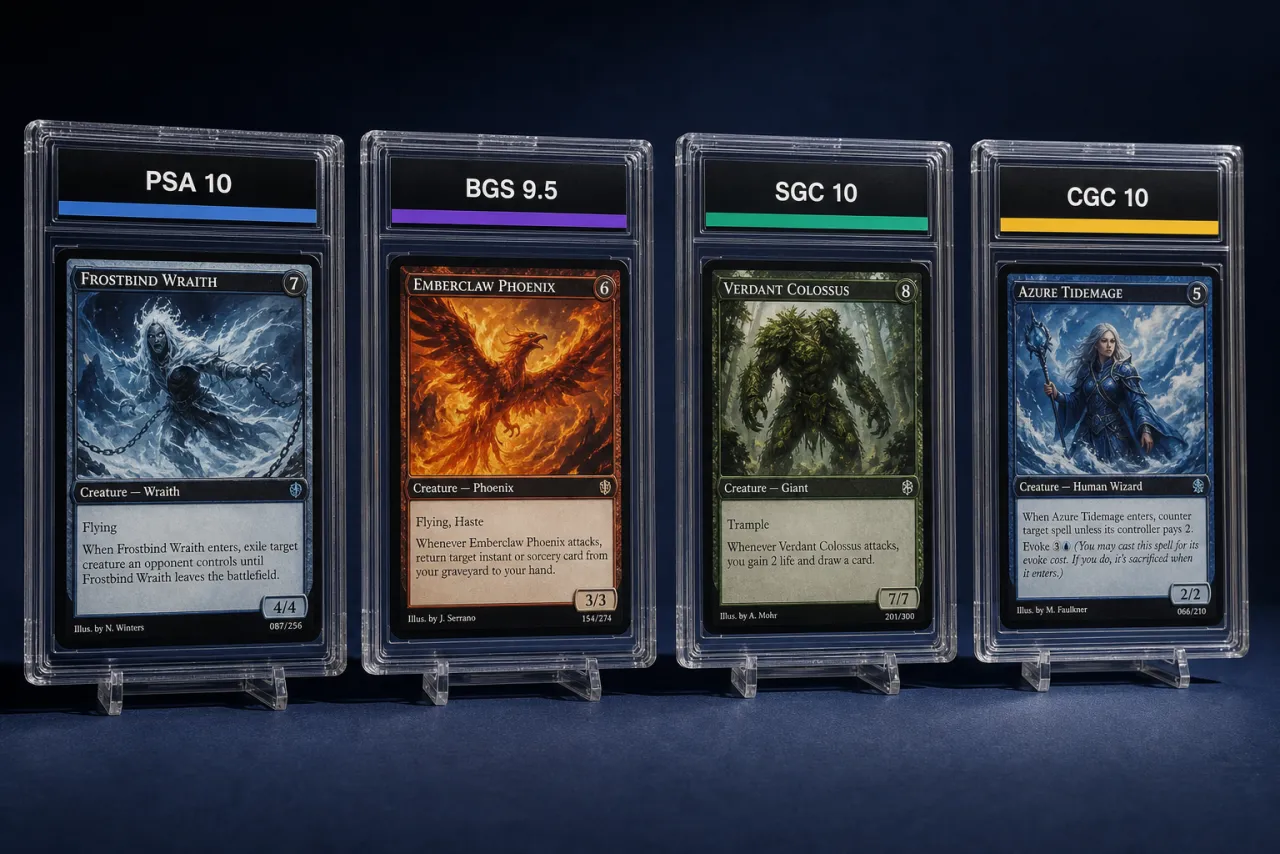
Buyers treat a PSA 10, a BGS 9.5, an SGC 10, and a CGC 10 as different products. Liquidity, label prestige, and how strict the room is that day all move the price. TCGpal’s cross-grade estimates translate one condition read onto each scale so you can compare comps before you pick a company.
PSA
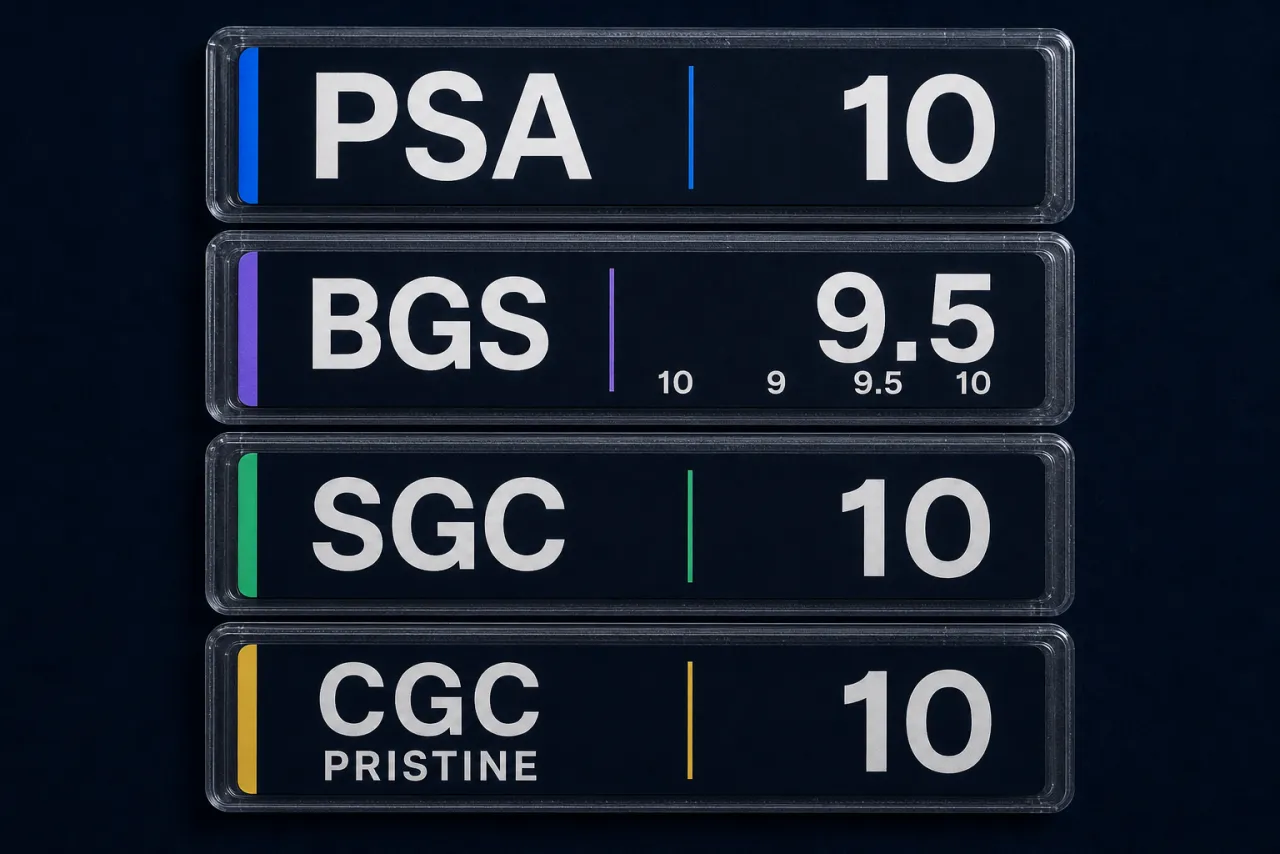
Professional Sports Authenticator is the default for Pokémon and most TCG resale. Whole-number scale from 1 to 10. A PSA 10 usually commands the highest premium and the deepest buyer pool. No subgrades on the label. Turnaround and cost vary by service level and season.
BGS
Beckett Grading Services uses half points (9, 9.5, 10) and prints four subgrades on the label. A BGS 10 Black Label — perfect 10s in every subgrade — is the hobby’s trophy grade and is graded more strictly than a typical PSA 10. Choose BGS when the subgrades themselves are part of the story you want to sell.
SGC
Sportscard Guaranty is known for faster turnaround, competitive pricing, and tuxedo-style slabs. Whole-number scale. Liquidity for modern TCG is thinner than PSA but growing. A reasonable choice when speed and cost matter more than matching the PSA 10 solds you saw on eBay.
CGC
Certified Guaranty Company came from comics and now grades cards with half-point increments and subgrades. Pristine 10 is the top grade. Pricing is often competitive. Market premiums for TCG still trail PSA on most Pokémon chase cards — check solds for that exact printing before you assume a CGC 10 equals a PSA 10.
How to choose
Follow the comps, not the logo. If PSA 10s for your card sell for three times a BGS 9.5, and your pre-grade looks like a 9.5, run the math on fees. If you want subgrades on the holder, BGS or CGC. If you want the widest buyer pool, PSA is still the default for most English Pokémon.
Example report
Front + back condition
Same four criteria a human grader uses.
- Centering
- 10
- Corners
- 9
- Edges
- 9.5
- Surface
- 10
PSA
10
BGS
9.5
SGC
10
CGC
9.5
PSA vs BGS vs SGC vs CGC at a glance
Four major TCG grading companies compared by scale, label, and typical use.
| PSA | BGS | SGC | CGC | |
|---|---|---|---|---|
| Scale | Whole numbers 1–10 | Half points (9, 9.5, 10) | Whole numbers 1–10 | Half points |
| Subgrades on the label | No | Yes, four subgrades | No | Yes |
| Trophy grade | PSA 10 | Black Label 10 | SGC 10 | Pristine 10 |
| Typical TCG use | Default for Pokémon resale | When subgrades are the story | Speed and competitive fees | Growing share; check solds |
FAQ
Questions collectors ask
Is a BGS 9.5 the same as a PSA 10?
Not in the solds. They can describe similar cards and still price differently. A BGS 9.5 with strong subgrades sometimes lands near a PSA 10; a weak 9.5 does not. Compare the exact printing, not the integers.
When is BGS worth sending over PSA?
When the subgrades are the story — you want them on the label — or when BGS solds for that card actually clear the fee. Black Label is a different bet: four perfect 10s, stricter than a typical PSA 10, and rarer.
Should I send modern Pokémon to SGC or CGC?
Only after you look at solds for that printing in those holders. Speed and price are real advantages. Liquidity is the tradeoff. If the buyer pool you want is hunting PSA 10s, a cheaper slab can still be a slower sale.
Why do the same card’s solds differ so much by company?
Label prestige, population, and who is shopping that week. The plastic is not interchangeable. TCGpal’s company estimates exist so you can line those solds up against one condition read before you pick a submission.
Does TCGpal pick a company for me?
No. It translates the same photos onto PSA, BGS, SGC, and CGC scales (Collector). You still choose based on comps, turnaround, and whether you want subgrades on the holder.