
Ledger · 6 min
How accurate is AI grading?
What TCGpal’s condition model can reliably see, where it is stricter than humans, and why a pre-grade is still not a PSA certificate.
Updated August 12, 2026 · TCGpal
Accurate at what?
Ask a narrower question: accurate at ranking condition from a photo, or accurate at predicting the exact slab a human will assign next month? The first is the job. The second is a weather forecast. Different rooms, different days, and different companies disagree with each other even when the card does not change.
TCGpal is built as a consistent pre-grade. It is often stricter on corners and edges than a hurried human glance, because it measures symmetry the eye rounds off. That is useful: a harsh pre-grade that still looks like a 10 in hand is a better submission candidate than a generous 10 that was lit poorly.
What the model can see
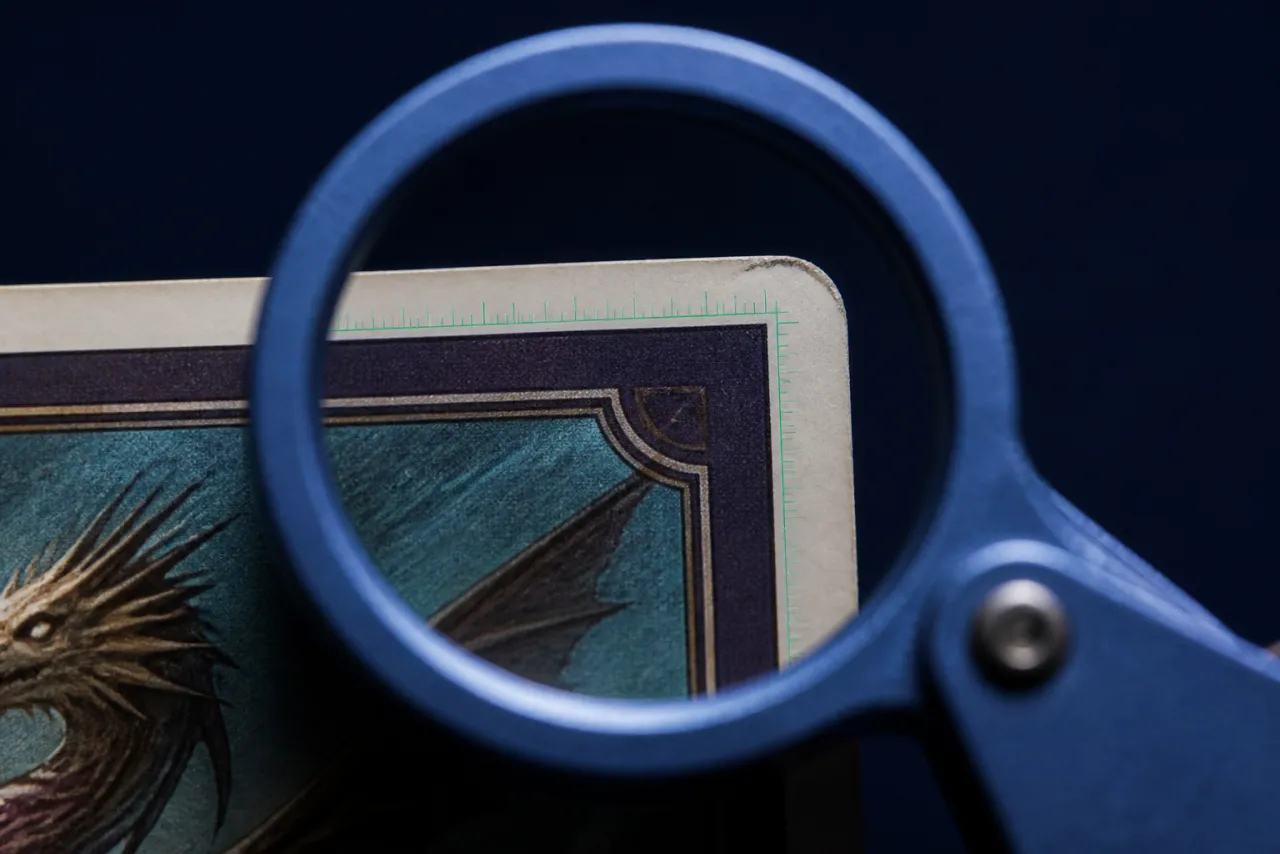
Centering ratios. Corner and edge whitening that shows in the photo. Many scratches, print lines, and surface marks. Large defects you would catch across the table. Given a sharp, well-lit front and back, the four subgrades are a serious read — not a novelty score.

What it can miss
Creases you can feel but barely see. Warping. Texture. Some surface scratches under glare. Ink that only appears at an angle. Anything outside the frame. If the photo is dark, cropped, or flashed, the report is grading the photo, not the card.
How to treat the number
If subgrades are high and the photos are clean, inspect the card under a light and consider submitting. If a subgrade is clearly low, believe it. If the report and your eyes disagree, retake the photos before you retake the conclusion. Never treat an AI 10 as a sold PSA 10.
FAQ
Questions collectors ask
Will TCGpal match the PSA grade I get back?
Not as a promise. Rooms disagree with each other on the same card. TCGpal’s job is a consistent pre-grade from your photos, not a forecast of one grader on one Tuesday. Use it to decide whether to submit, not to title a listing.
Why is the AI harsher than my local shop?
It measures centering and symmetry instead of rounding them off, and it does not talk itself up because the pull is exciting. A harsh pre-grade that still looks like a 10 in hand is a better candidate than a friendly 10 shot under kitchen glare.
If I retake the photos, will the grade change?
It can. The model grades what it is shown. Better light, less glare, and a true back shot often move surface and edges. If the number swings a lot, trust the cleaner photos — and your eyes — not the first attempt.
Can it see a crease I can feel?
Often no. Light creases, warping, and texture hide in a flat photo. Feel the card. If you can find the crease with a fingertip, believe your hand over a clean surface score.
Do you publish an accuracy percentage?
No. A single hit rate against one company would pretend the rooms agree. They do not. We would rather tell you what the model can see, what it misses, and how to use the number than invent a score that looks like a lab result.